Foxtails in Oregon: What Portland Dog Owners Need to Know
This summer, three George & Friends Dog Training clients have reported foxtail-related injuries in their dogs.
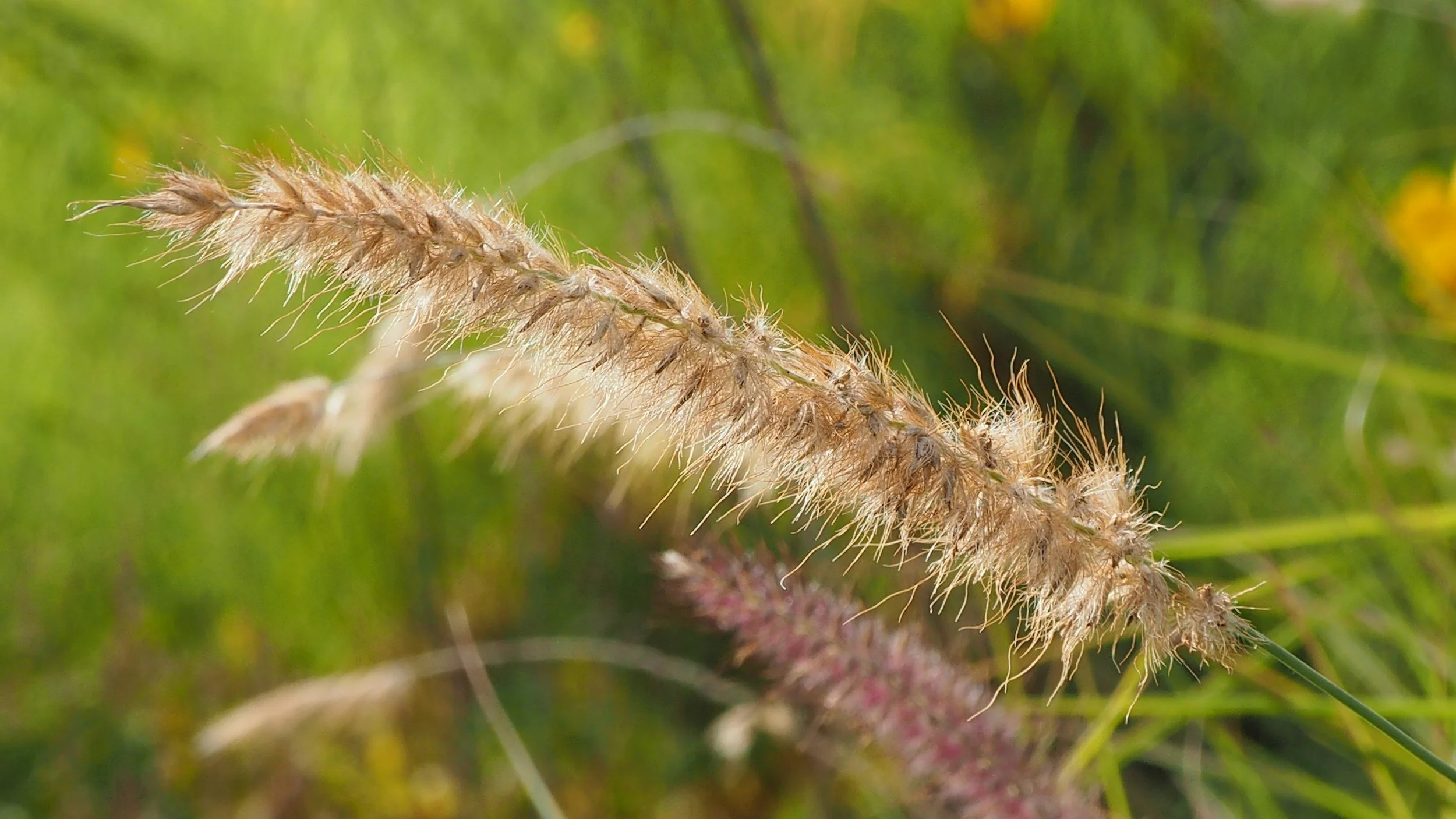
Foxtail is a common name used for several grasses with bristly or barbed seed heads.
Three cases do not establish an official local trend, but they certainly got our attention. They also demonstrate how easily Oregon dogs can encounter this small and often overlooked seasonal hazard. DoveLewis reported in May 2026 that it has seen sharp, barbed grass bristles called awns, reach the brain or lungs, while the Eugene veterinary clinic specifically identifies Eugene and the southern Willamette Valley as particularly prevalent areas.
Foxtails may grow beside sidewalks, along trails, in parking strips, around dog parks, in vacant lots and throughout dry fields. Your dog does not need to run through acres of tall grass to pick one up. A single dry seed head beside a neighborhood walking path may be enough.
At George & Friends, we teach dogs how to move safely through the human world. Foxtails are a good reminder, however, that not every danger can be solved through obedience alone. Sometimes the most important skill belongs to the person holding the leash: noticing a potential hazard before the dog reaches it.
Are Foxtails Common in Oregon?
Yes. Grasses commonly called foxtails are widespread in Oregon, especially in dry, grassy and disturbed areas.
The greatest danger to dogs generally develops after the seed heads mature, dry out and begin breaking apart during late spring and summer.
Portland’s DoveLewis Veterinary Emergency and Specialty Hospital warns pet families about foxtails during the warmer months, particularly around dry grassy areas. Oregon veterinary clinics have treated dogs with foxtails lodged in their paws, ears, noses and other parts of the body.
Oregon State University also documents several grasses commonly called foxtails throughout western Oregon.
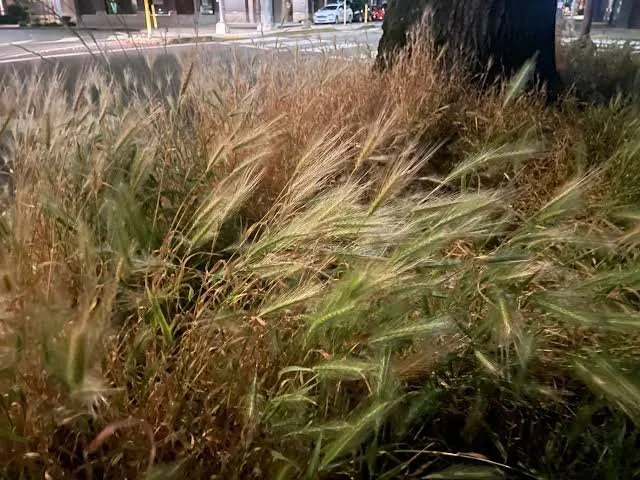
What Exactly Is a Foxtail?
“Foxtail” is a common name rather than the name of one specific plant.
In veterinary conversations, the term generally refers to a grass seed or cluster of seeds with stiff, pointed bristles called awns.
Awns are the sharp, bristle-like parts extending from a grass seed or seed head. On some foxtail-type grasses, the awns have tiny backward-facing barbs.
Those barbs help the seed attach to animal fur, clothing and other materials. Unfortunately, they can also make it difficult for the seed to move backward once it enters a dog’s coat, skin, ear, nose, eye or paw.
Some Oregon foxtails are native, while others are introduced species.
Not every grass with a fuzzy or bottlebrush-shaped seed head presents the same danger. Correct plant identification is helpful when deciding how to manage foxtails on your property.
The important question is:
Does the mature seed head have sharp, detachable awns that could attach to or enter my dog?
How Does Foxtail Grow?
Many foxtail-type grasses begin growing during Oregon’s cooler and wetter months.
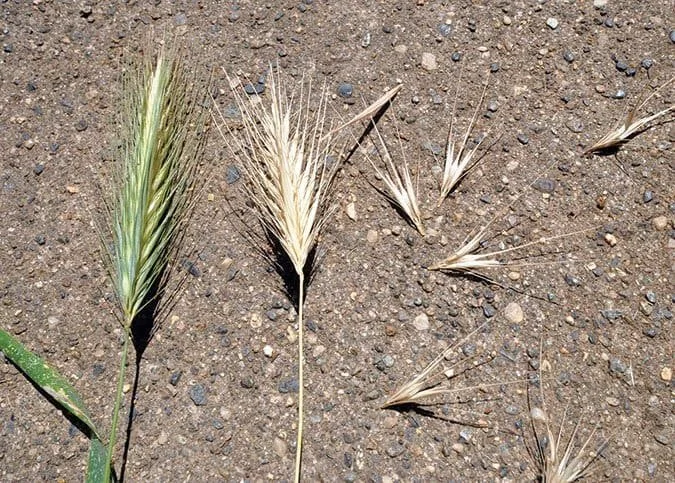
Hare barley is generally a cool-season annual grass. Its seeds often germinate after fall rains. The young grass grows through the cooler months and produces seed heads during spring.
At first, the seed heads may be green, soft and flexible.
As temperatures rise and the vegetation begins to dry, the seed heads become tan, brittle and sharp. The mature seed head eventually breaks apart into individual seeds or small clusters.
Foxtail barley has a somewhat different life cycle because it is often perennial, but its seed heads also become more hazardous as they mature and dry.
This is why a patch of grass that looks relatively harmless during early spring may become dangerous later in the season.
How Do Foxtails End Up on the Ground?
The barbed structure of a foxtail seed is part of the plant’s natural dispersal system.
As the seed head dries, pieces may:
Fall around the original plant
Move with the wind
Attach to animal fur or feathers
Catch on socks, shoes and clothing
Travel on a dog’s coat or between the toes
Move in hay, cut grass or landscaping material
Scatter during mowing or trimming
This explains why foxtails are not only found on standing plants.
Detached awns may remain in dry grass, collect beside curbs, become mixed into freshly cut vegetation or sit almost invisibly on a trail.
Mowing may not solve the problem by itself. Some grasses can produce new seed heads on shorter stalks after mowing. If the seed heads have already matured, mowing may also scatter dangerous awns across the ground.
Where Are Foxtails Most Likely to Grow in Oregon?
Foxtail-producing grasses frequently grow in open, dry or disturbed areas.
Common locations include:
Dry or unmowed fields
Roadsides and highway shoulders
Vacant lots
Parking strips
Trail edges
Dog parks and off-leash areas
Pasture margins
Construction and development sites
Railroad and industrial areas
Dry lawns
Neglected landscaping
Ditch banks
Areas with compacted or frequently disturbed soil
Oregon veterinary clinics have reported finding foxtails in vacant lots, dog parks and ordinary landscaped areas. They are not limited to remote hiking trails or agricultural land.
Portland Metropolitan Area
Foxtail-producing grasses are documented in and around Portland, and Portland-area emergency veterinarians treat foxtail injuries.
Portland-area dog families should assume foxtails may be present throughout:
Multnomah County
Washington County
Clackamas County
Yamhill County
Columbia County
Nearby areas of southwest Washington
A dry, unmanaged field in one county may present a much greater risk than a maintained park located across the county line.
Why Are Foxtails Dangerous to Dogs?
A foxtail is shaped to travel in one direction.
The pointed end may enter a dog’s fur, skin or one of the body’s natural openings. Tiny backward-facing barbs can prevent it from moving back out easily.
As the dog walks, licks, shakes, sneezes or moves, the awn may continue working its way inward.
Unlike an ordinary splinter, a foxtail may disappear beneath the skin. The entrance wound may begin to close while the grass seed remains inside.
Foxtails do not dissolve inside the body. An embedded awn may cause irritation, infection or an abscess. In more serious cases, it may migrate farther into the body.
Veterinarians have reported grass awns traveling into the chest, lungs and other critical areas. These severe complications do not happen with every exposure, but they explain why sudden symptoms after contact with dry grass should be taken seriously.
Signs Your Dog May Have a Foxtail
Symptoms depend on where the foxtail entered the dog’s body.
Paws and Between the Toes
Watch for:
Persistent licking or chewing of one foot
Sudden limping
Redness or swelling between the toes
A small puncture or draining sore
A lump or abscess
Pain when the paw is touched
Ears
Watch for:
Sudden or violent head shaking
Repeated pawing at one ear
Holding the head tilted
Pain when the ear or head is touched
Redness, discharge or an unusual odor
Nose
Watch for:
Sudden, repeated or violent sneezing
Pawing at the nose
Nasal discharge
Blood from one nostril
Sudden distress after sniffing dry grass
A nasal foxtail may become lodged much farther inside the nose than you can see.
Eyes
Watch for:
Squinting
Keeping one eye closed
Heavy tearing
Redness
Swelling
Pawing or rubbing at the eye
Thick discharge
Eye symptoms require prompt veterinary attention. Do not search beneath the eyelid with tweezers.
Mouth and Throat
Watch for:
Gagging
Coughing
Repeated swallowing
Excessive drooling
Pawing at the mouth
Sudden refusal to eat
Pain while chewing
Difficulty breathing
Beneath the Skin or Deeper in the Body
Watch for:
A painful lump
A foul-smelling wound
A sore that drains and then returns
Fever
Lethargy
Reduced appetite
Persistent coughing
Unexplained pain
Symptoms that disappear briefly and then return
What Should You Do If You Find a Foxtail?
A loose foxtail resting on top of the coat can usually be removed before it causes an injury.
Carefully brush or pick it away, then inspect the surrounding coat and skin for additional pieces.
Contact your veterinarian promptly when:
The pointed end has entered the skin
You cannot remove the entire awn easily
The foxtail is in an ear, eye, nostril or mouth
Your dog is repeatedly sneezing or coughing
Your dog is shaking their head
There is swelling, drainage, pain or limping
The seed disappears beneath the skin
Symptoms continue after you believe the seed was removed
Do not blindly probe an ear, nostril, eye or puncture wound with tweezers. You may push the foxtail deeper, break it into pieces or injure delicate tissue.
Difficulty breathing, severe distress, collapse or uncontrolled bleeding should be treated as an emergency.
How to Protect Your Dog From Foxtails in Oregon
Look Ahead Before Allowing Your Dog to Sniff
Scan the edges of sidewalks, trails and fields.
Dry, tan and bristly seed heads deserve extra space.
Your dog does not need to investigate every patch of grass. Use the leash and a familiar cue such as Leave It, Here or With Me to guide your dog around questionable vegetation.
This is not about constantly correcting your dog. It is environmental management: notice the hazard early and make the safer route your idea.
Be Especially Careful Around Dry Grass
Green vegetation may still contain awned grasses, but the risk increases when the seed heads become dry, brittle and easy to detach.
Avoid allowing dogs to charge through tall, dry grass with their noses down or mouths open.
Complete a Foxtail Check After Outdoor Activities
After walks, hikes, field trips and dog-park visits, inspect:
Between every toe
Around the paw pads
The tops of the feet
Ear openings and ear feathering
Around the eyes
The muzzle, lips and beard
Armpits
Groin and genital area
Under the collar and harness
Tail and rear feathering
The entire coat
Use your hands as well as your eyes. A small awn may be easier to feel than to see.
Pay Extra Attention to Certain Coat Types
Dogs with long coats, curly coats, feathered ears or heavily furred feet may collect more plant material. Their coats may also make awns more difficult to find.
Regular brushing and appropriate trimming around the paws may help. Ask your groomer or veterinarian what is suitable for your dog’s specific coat rather than shaving the dog indiscriminately.
Maintain Your Yard Before Seed Heads Dry
The best time to manage hazardous grasses is before they develop mature seeds.
Pull or dig out plants when possible. Collect all seed heads and place them directly into a bag.
Do not leave mature grass clippings in areas where dogs walk or play.
Because the word foxtail may refer to several grass species, homeowners with a significant problem should identify the plant before selecting a control method. Oregon State University Extension or a qualified landscape professional may be able to help.
Do Not Rely on Mowing Alone
Mowing may temporarily reduce the height of the grass without eliminating the plant.
Some grasses may produce new seed heads on shorter stalks. Mature awns may also remain scattered in the cut material.
If mature foxtails are mowed, the clippings and seed heads should be collected and removed from areas used by dogs.
Watch Your Dog After a Known Exposure
A dog may appear normal immediately after walking through dry grass.
Continue watching during the following hours and days for:
Licking
Swelling
Limping
Sneezing
Head shaking
Coughing
Gagging
Discharge
Changes in appetite or behavior
Frequently Asked Questions About Foxtails in Oregon
When Is Foxtail Season in Oregon?
The primary risk period is late spring through summer, when grass seed heads mature, dry and detach.
The exact timing varies depending on the grass species, elevation, rainfall, mowing and local weather conditions.
Dry awns may remain in the environment even after the plant itself has died.
Are Foxtails Native to Oregon?
Some are native and some are not.
Foxtail barley is native to western North America. Hare barley or mouse barley was introduced from Eurasia.
Foxtail is a general term used for several different grasses and their awned seeds.
Are Foxtails Common in Portland?
Yes. Awned, or barbed grasses, occur in Portland and throughout the surrounding metropolitan area.
Local veterinary warnings and botanical records confirm their presence.
There is no reliable public information showing which Portland neighborhood or metro-area county has the highest concentration.
Can a Foxtail Come Out by Itself?
Do not depend on it.
A loose awn may fall from the surface of the coat, but an embedded awn is structured to move inward rather than backward.
Walking, licking, sneezing and head shaking may drive it deeper.
Can a Foxtail Kill a Dog?
Most dogs recover when the foxtail is found and treated promptly.
However, migrating grass awns can cause serious infections and may reach the lungs or other critical structures.
Difficulty breathing or signs of serious illness require urgent veterinary care.
Can I Remove a Foxtail With Tweezers?
You may remove a foxtail that is completely loose and resting on top of the fur.
Do not dig into the skin or probe an ear, eye, nose or mouth.
When an awn is embedded, partially hidden or causing symptoms, contact a veterinarian.
Are Dog Parks Safe From Foxtails?
A well-maintained dog park may have fewer tall grasses, but no outdoor location should automatically be considered foxtail-free.
Foxtails may grow around fences, beside paths, near benches or in areas that were recently mowed.
Check the ground before releasing your dog and inspect your dog before leaving.
The George & Friends Takeaway
Foxtails are small, but preventing foxtail injuries requires the same approach we use for many dog-training challenges:
Observe early. Manage the environment. Do not wait for the situation to become an emergency.
You do not need to stop taking your dog outside or become afraid of every patch of grass.
You do need to recognize dry, awned seed heads, guide your dog around them and complete a careful paw and coat check after possible exposure.
The three foxtail injuries reported by George & Friends clients this summer are a reminder that this is not only a California problem or something found far away in rural fields.
Foxtails are part of the Oregon environment, including the Portland metropolitan area.
A quick paw and coat check after a walk may prevent a painful injury, a difficult search for a migrating seed and an expensive veterinary procedure.
George & Friends Dog Training provides dog-training and environmental-management education, not veterinary diagnosis or treatment. Contact your veterinarian whenever you suspect that a foxtail has entered your dog’s skin, paw, ear, eye, nose, mouth or body.